
The Great Wildebeest Migration Safaris
The Great Wildebeest Migration Safaris: Complete Guide for 2026
The Great Wildebeest Migration Safaris offer one of the most dramatic wildlife spectacles on Earth. Every year, more than 1.5 million wildebeests, accompanied by zebras and gazelles, cross the endless plains of the Serengeti and Masai Mara in search of fresh grazing. This natural rhythm of life—driven by rains, survival, and instinct—makes the wildebeest migration wonder of the world and one of Africa’s most unforgettable experiences.
Whether you want to witness the river crossings in Kenya, the calving season in Tanzania, or the long migration trails across the Serengeti, this guide explains everything you need to know. Here, you will find the best time to see wildebeest migration in Masai Mara, the full wildebeest migration cycle, maps, routes, safari tips, and recommended experiences for your dream adventure.
As a Tanzania safari specialist at Kenya Safari Experience, I have spent years guiding travelers along this migration path, and this guide reflects real insights from the field. By the end, you will know exactly how to plan your perfect journey.
What Is the Great Wildebeest Migration?
The Great Wildebeest Migration is a circular journey that spans the Serengeti in Tanzania and the Masai Mara in Kenya. Although many people imagine it as a single event, the migration is actually a continuous cycle that never truly stops. As soon as the herds complete one stage, they begin another, driven largely by rainfall and the promise of fresh grass. This movement keeps over a million animals alive and nourished throughout the year.
When travelers hear the term “Masai Mara migration,” they often imagine the dramatic river crossings. But the migration is much more than that. It includes calving season, long-distance travel, grazing periods, predator interactions, and the constant challenge of staying alive in a world filled with natural dangers. This ongoing journey makes the migration one of nature’s purest expressions of survival.
the Great Wildebeest Migration Photo Gallery 2026
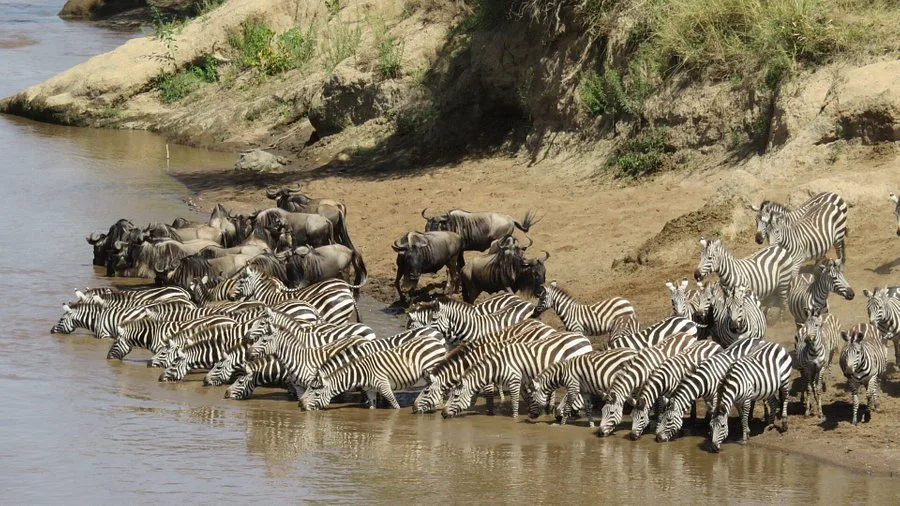
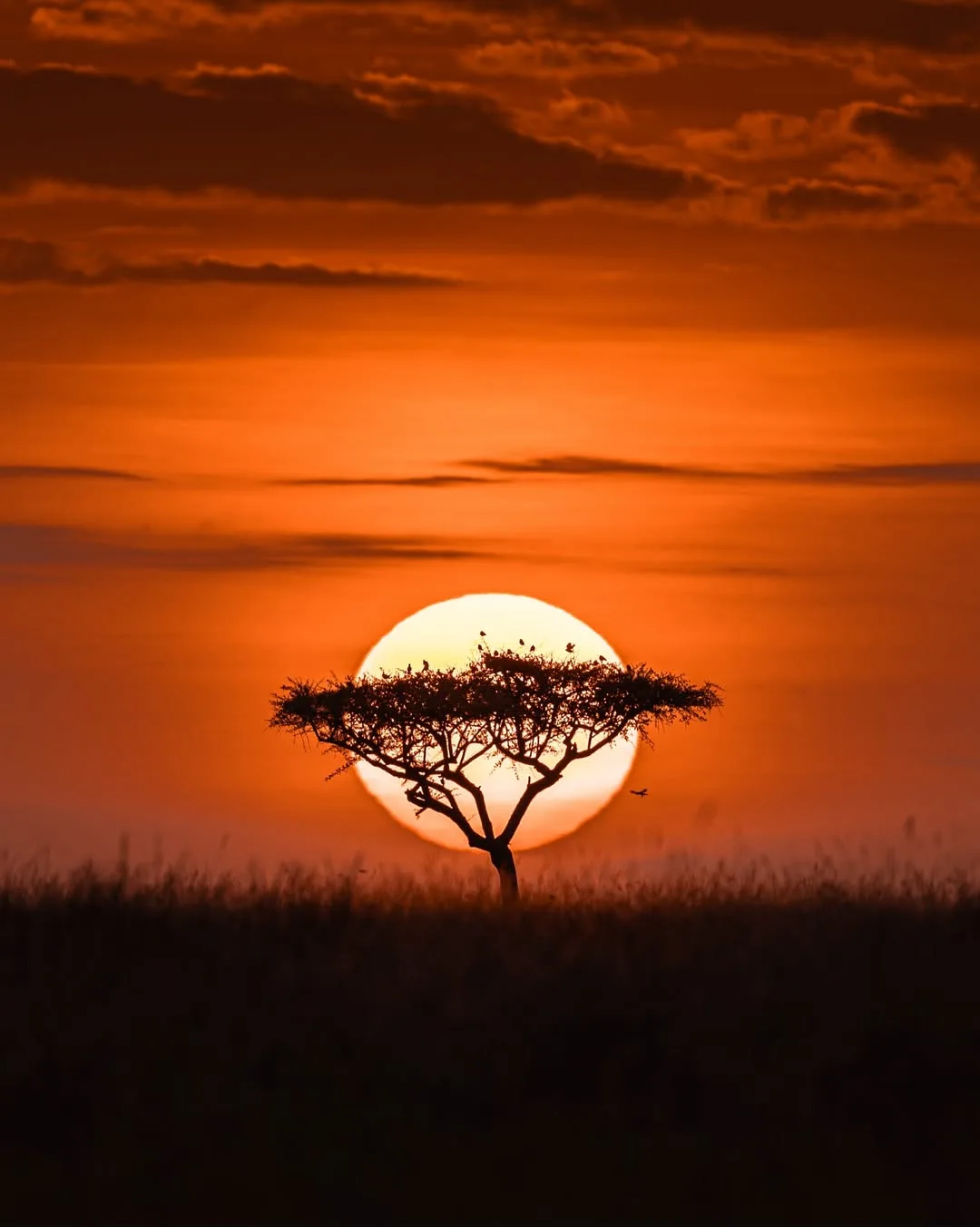
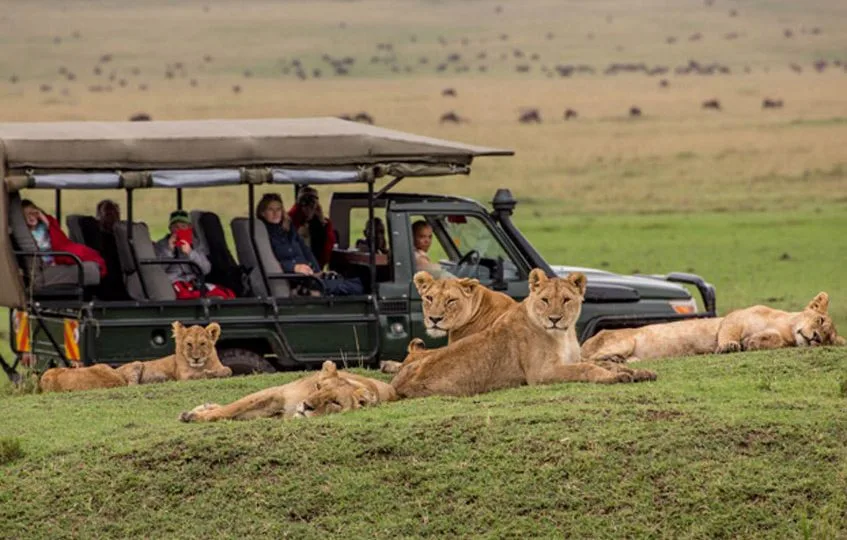
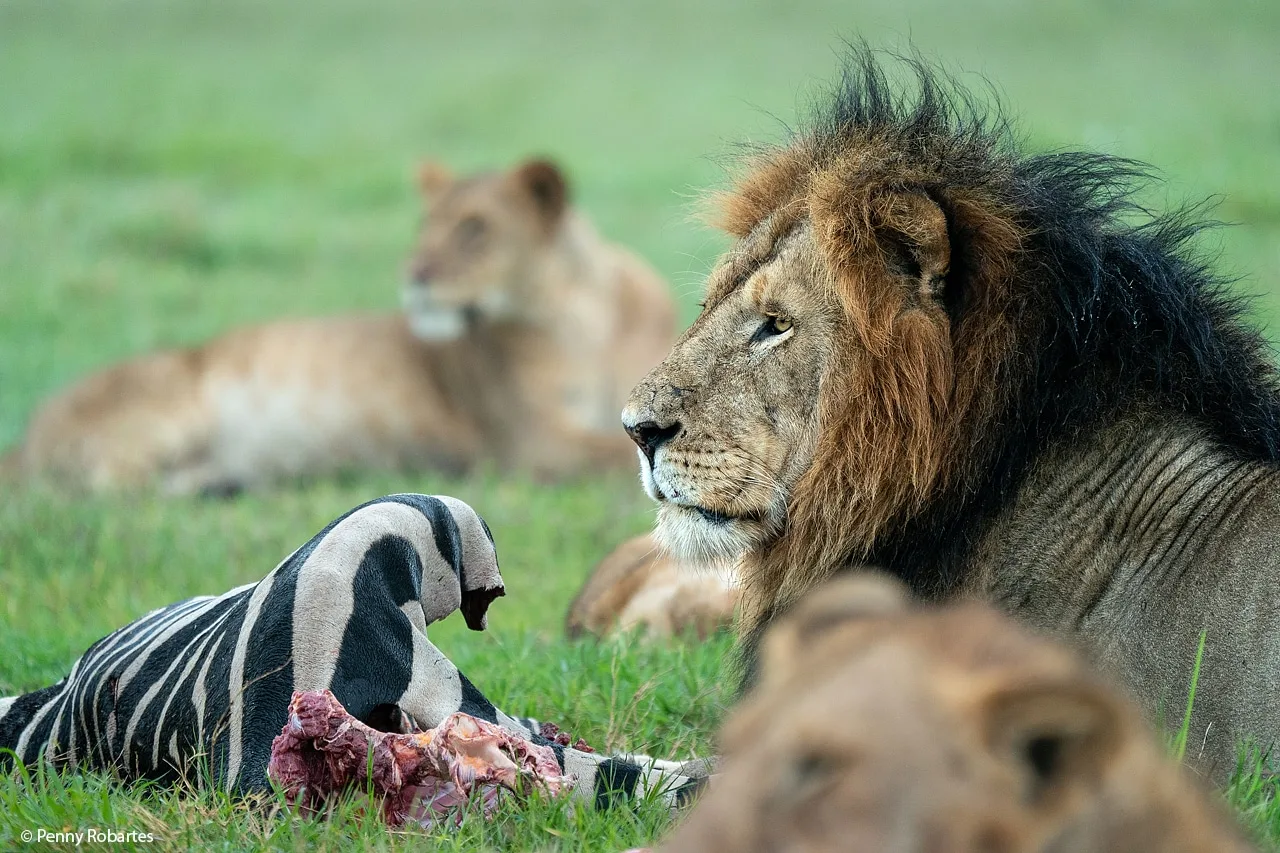
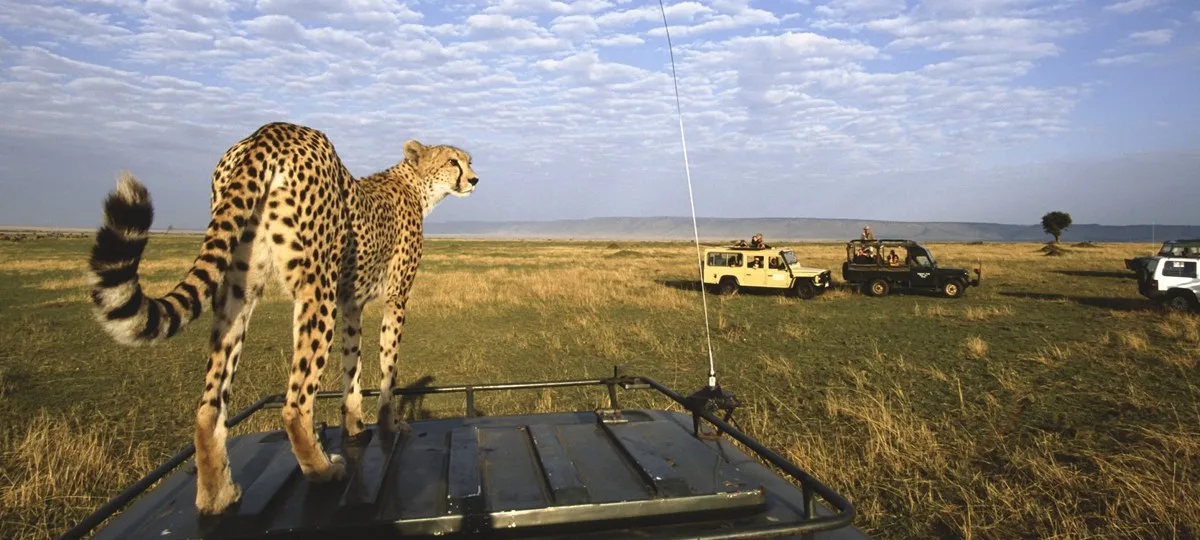
Explore our Wildebeest Migration Photo Gallery below and discover the amazing wildlife, scenic landscapes, and unforgettable safari experiences that await you.
Expert recommendation
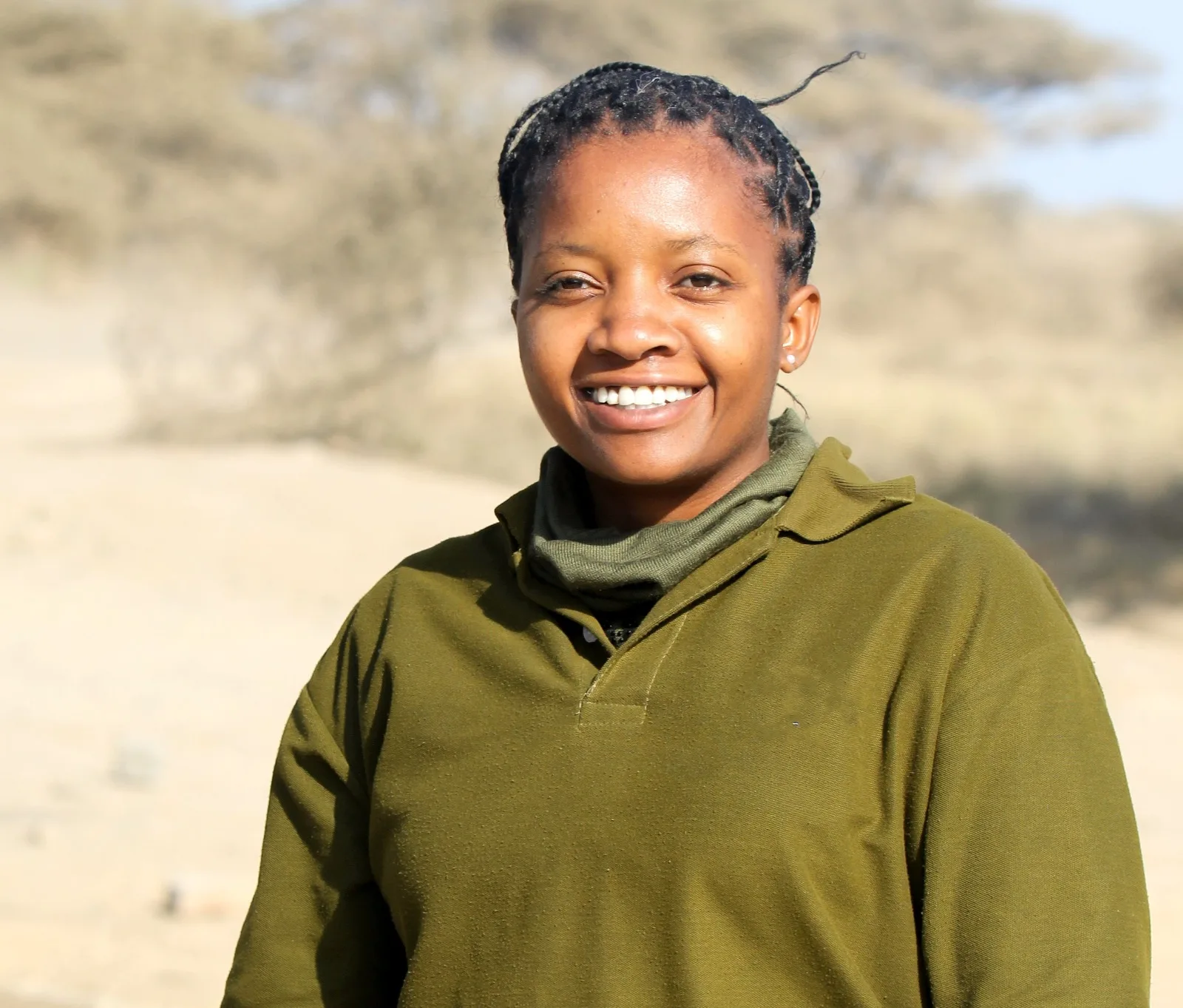
Having guided guests through the plains of both Kenya and Tanzania for many years, I always encourage travelers to plan their Great Migration safari based on what moves them most. Some seek the raw thrill of the Mara River crossings, while others prefer the quiet beauty of calving season or the long columns of animals marching through the Serengeti. What makes this migration itinerary special is that it follows the natural heartbeat of the herds. Every moment is chosen to place travelers exactly where the action unfolds. With Kenya Safari Experience, the goal is simple: to give every guest a front-row seat to one of the world’s most unforgettable natural events.

Ramadhan Ally
Kenya Safari Specialist
At a glance
- Kenya and Tanzania
- Safari Experience
- Free, no-obligation Kenya safari quotes
Tailormade itineraries
Every Kenya Safari Experience adventure is customized just for you—no fixed tours or set dates. Speak with our Kenya Safari experts to help you plan your perfect Kenya Safari itinerary.
- Witness the Great Wildebeest Migration.
- See Mara River crossings.
- Explore Masai Mara & Serengeti.
- Spot lions, cheetahs, and wildlife.
- Enjoy stunning plains and landscapes.
- High chances to spot the Big Five in natural habitats.
- Travel at a relaxed, well-paced itinerary.
Why the Wildebeests Keep Moving
At the heart of the migration lies a simple need: fresh food and water. Wildebeests depend on new grass shoots, which only sprout after rainfall. This forces them to move with the seasons. They have an incredible ability to detect distant thunderstorms, and their instincts push them toward areas where grazing will be most nutritious.
Researchers studying the herds have used tracking collars, aerial monitoring, and even satellite imaging to follow their routes. No matter what year it is, the movement always follows the same general path, though exact dates may shift slightly depending on rainfall. This rhythm is so precise and ancient that some scientists believe the migration pattern has remained largely unchanged for thousands of years.
Where the Migration Happens Across East Africa
The migration’s home is a massive wildlife region shared between Tanzania and Kenya. In Tanzania, the Serengeti National Park and the Ngorongoro Conservation Area provide vast grasslands that support the herds throughout much of the year. As the seasons shift, the herds cross into Kenya’s Masai Mara, a rich savannah ecosystem known for its high density of predators and dramatic landscapes.
This shared environment creates a seamless connection between the two countries. The animals don’t recognize borders—they simply follow nature’s command. This is why travelers planning to witness the Great Migration should consider both destinations, depending on the season and the type of experience they want.
The Month-by-Month Wildebeest Migration Cycle
Understanding the full migration cycle helps travelers decide exactly when to visit. Below is an extended look at what happens each month of the year.
January to March: The Calving Miracle in Southern Serengeti
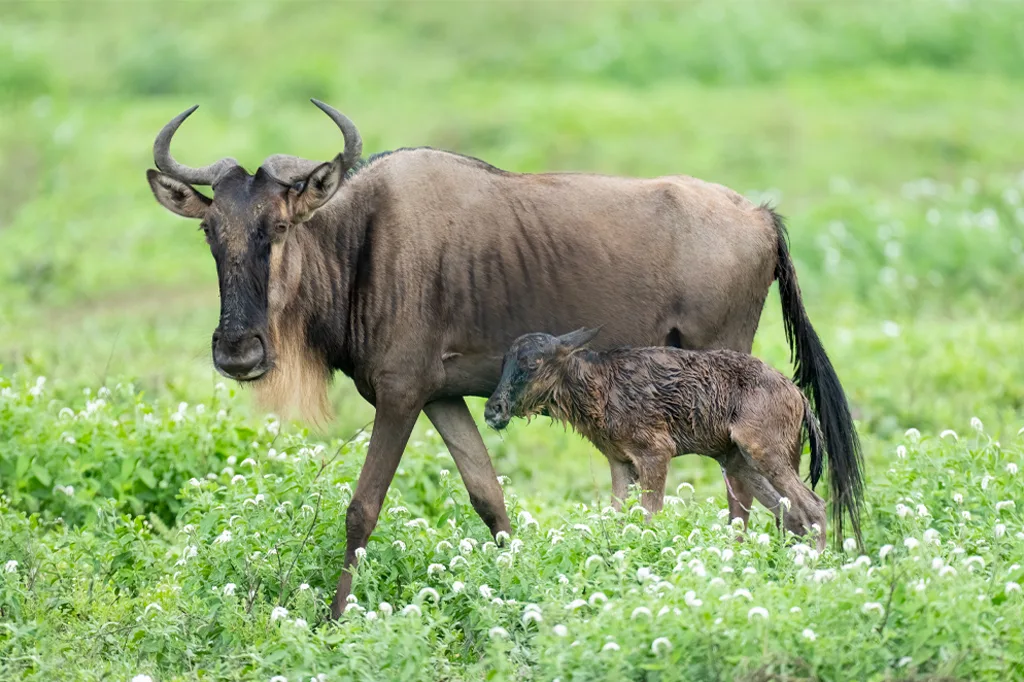
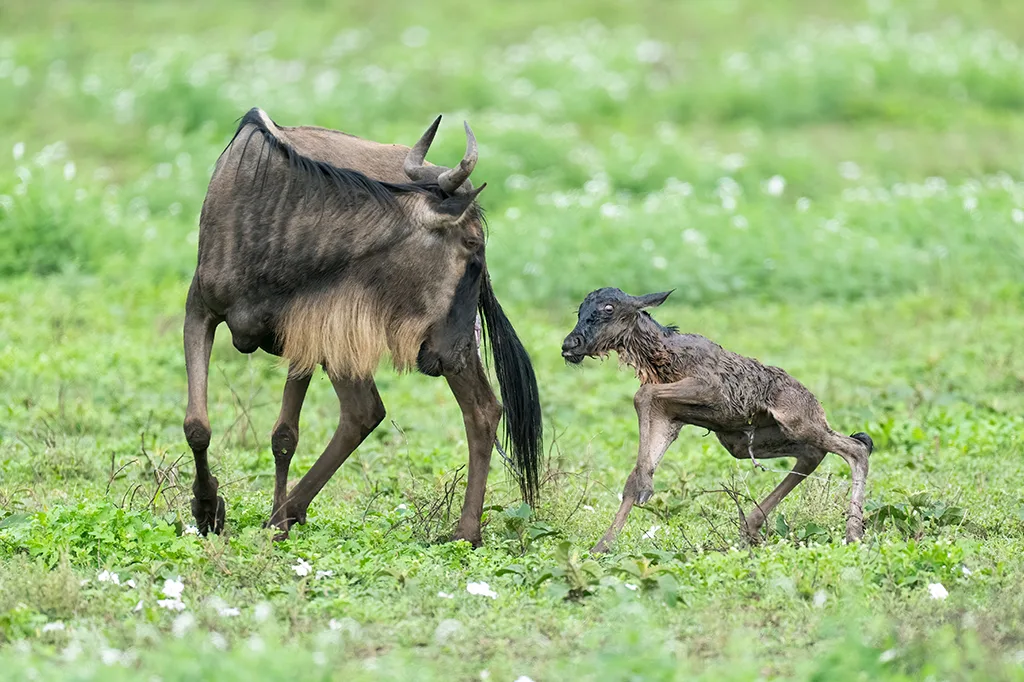
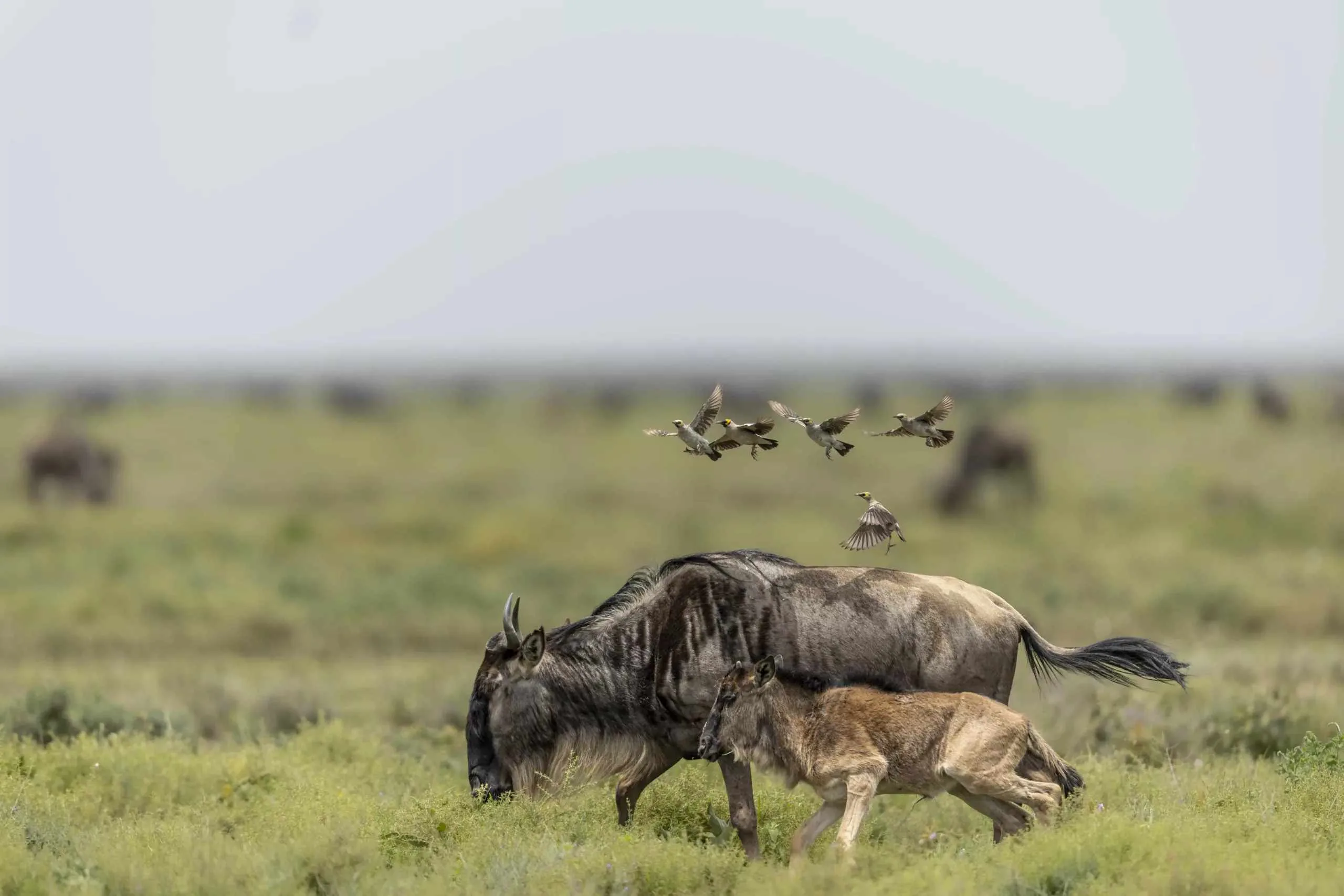
As the year begins, the migration gathers in the southern Serengeti, especially around the Ndutu region. This area has short grass plains that are perfect for raising newborns. Over a period of just a few weeks, nearly half a million calves enter the world. It is one of the most heartwarming scenes in the natural world—tiny wildebeests wobbling on their legs, learning to run within minutes.
But calving season is not only adorable; it is also intense. Predators like lions, hyenas, and cheetahs are drawn to the abundance of vulnerable young animals. This creates incredible opportunities for witnessing the raw drama of nature. For many travelers, this season becomes their favorite part of the migration.
April to May: The Long Journey Begins
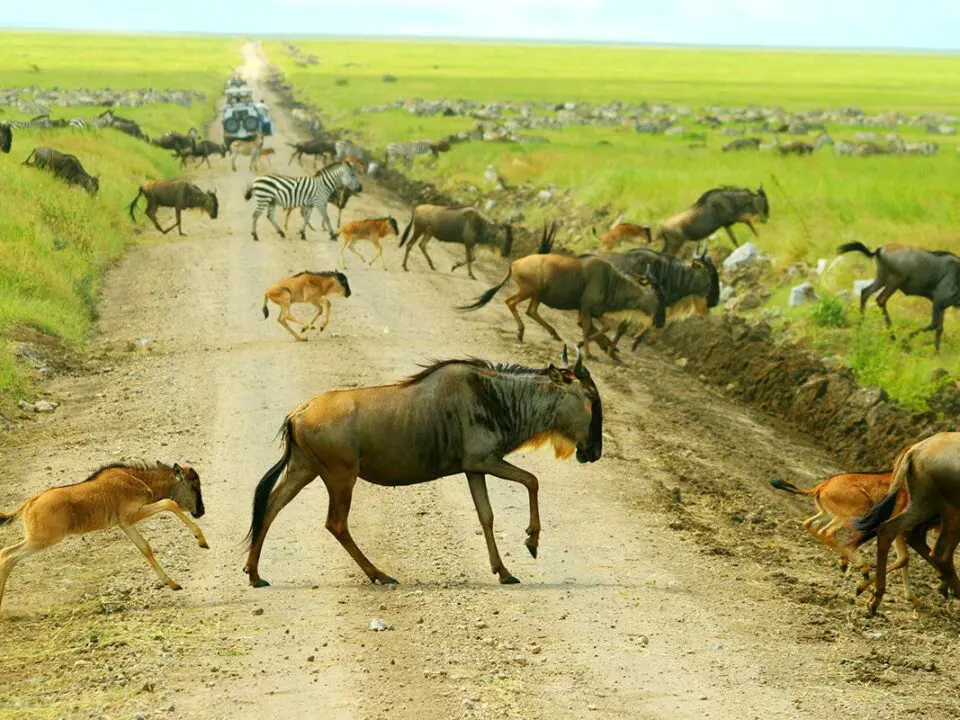
When the rains shift, the herds begin moving north. This is the time when travelers see endless lines of wildebeests marching across the plains in long, organized columns. These scenes are almost hypnotic—thousands of animals moving with purpose, yet without noise or chaos. The Serengeti is lush during these months, with green grass and dramatic storm clouds painting the sky.
Although the movement is steady, it is less frantic than other parts of the migration. This period offers calm but deeply scenic safaris, with fewer crowds and a peaceful atmosphere that allows travelers to truly absorb the beauty of the Serengeti.
June to July: Facing the Grumeti River
By mid-year, the herds reach the western corridor of the Serengeti. The Grumeti River becomes the first major obstacle of the migration. Its deep waters are home to enormous crocodiles that lie still, waiting for the moment the herds gather at the riverbank. These crossings are not as massive as those of the Mara River, but they offer unforgettable drama and are much quieter in terms of tourism.
This period also marks the transition from the greener parts of the Serengeti toward the northern plains, where the landscape begins to open wider and the animals spread out before their biggest challenge of the year.
July to August: The Iconic Mara River Crossings in Kenya
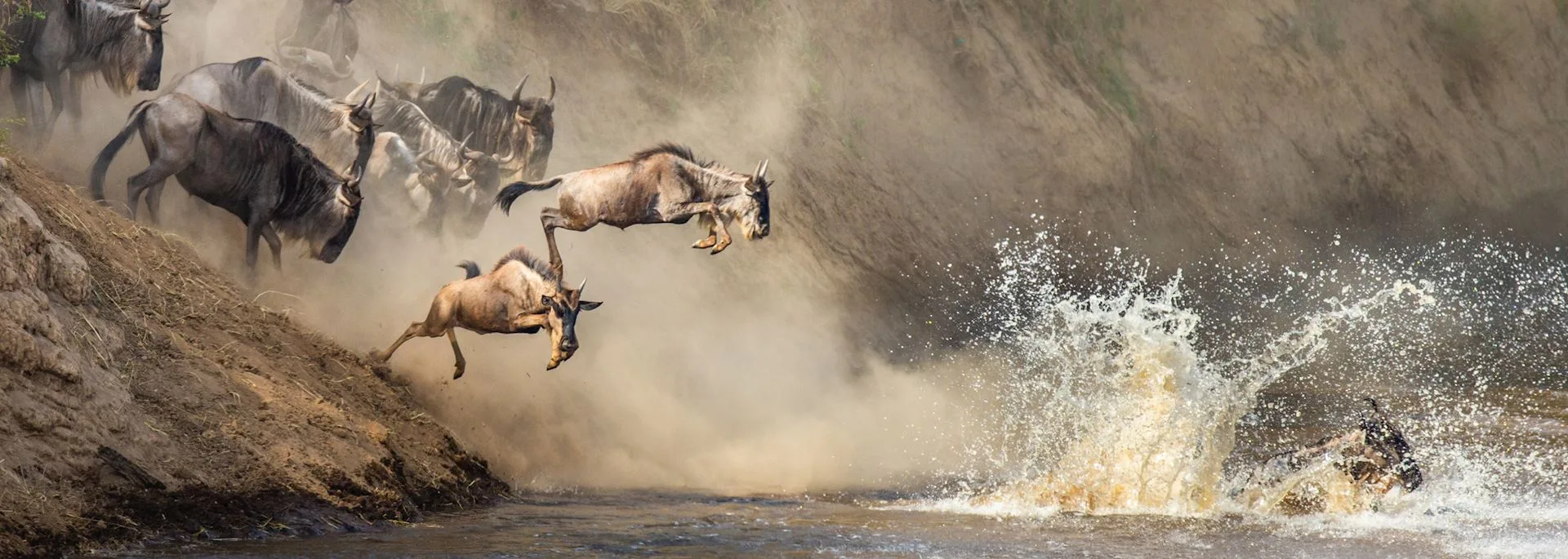
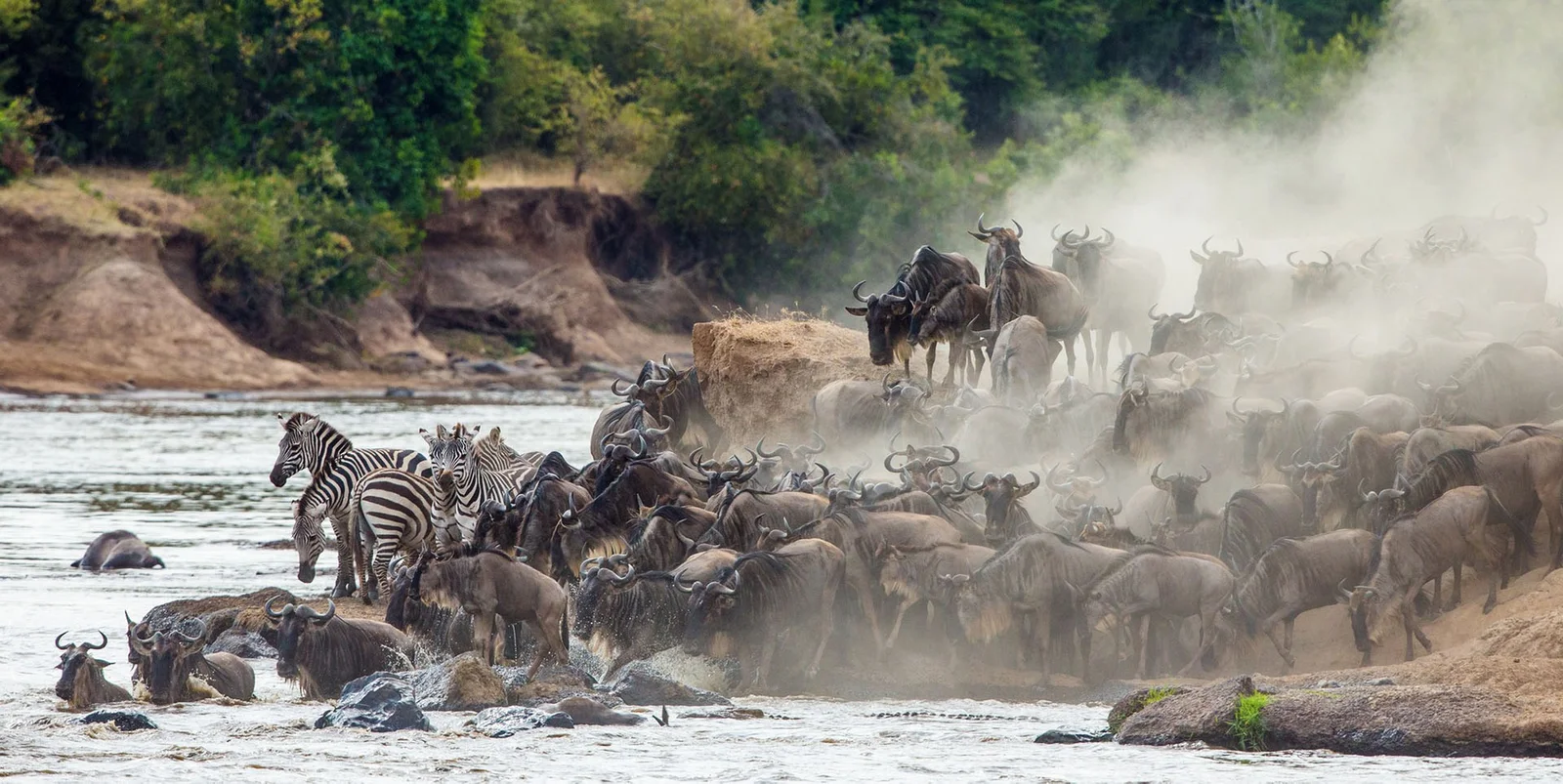
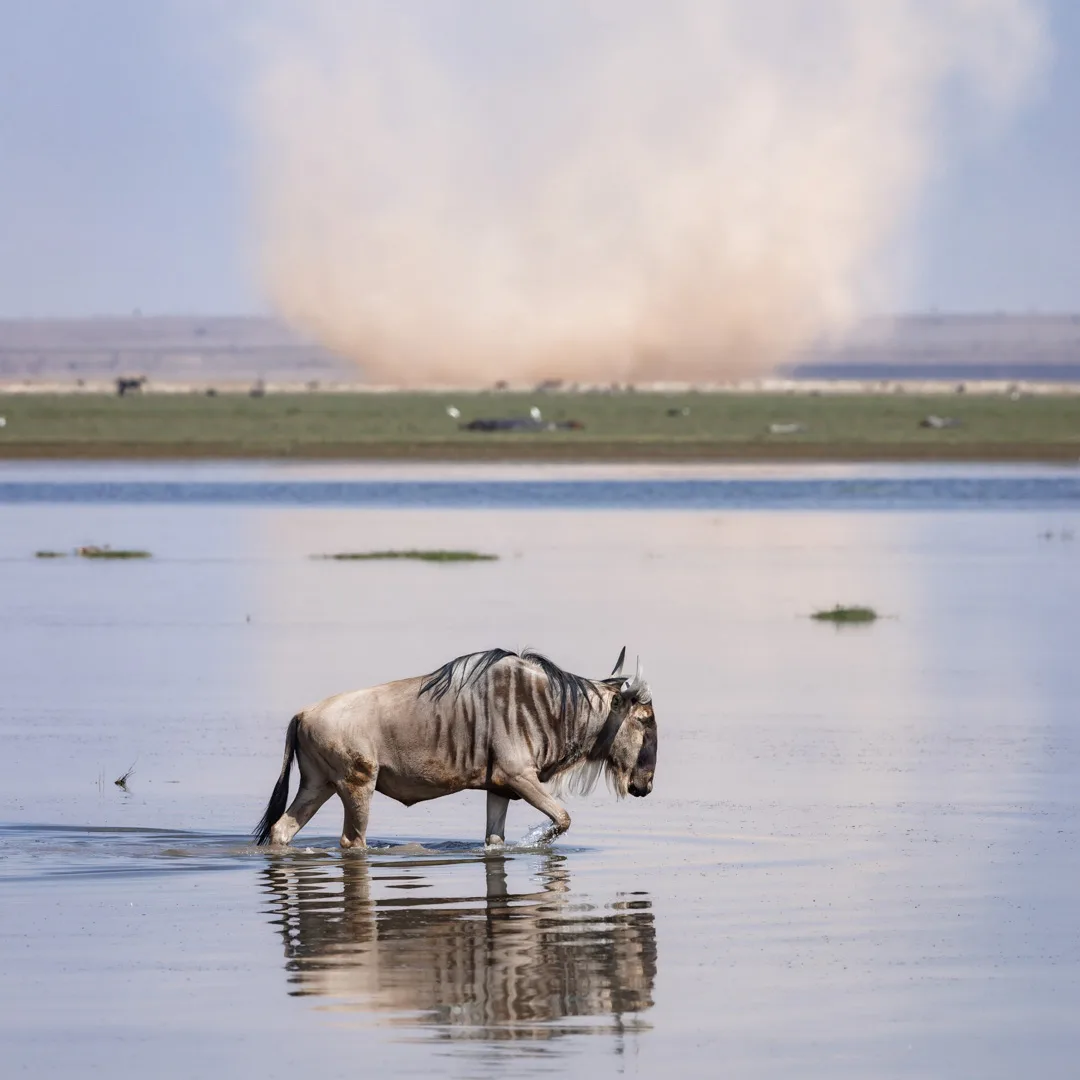
These months bring the most famous scenes of the migration. The herds reach the Mara River, which winds through both Tanzania and Kenya. The river crossings in the Masai Mara are legendary for a reason. Thousands of wildebeests gather on the riverbanks, hesitating as crocodiles silently patrol the water. Suddenly, one brave animal leaps, and a chain reaction follows—hundreds or even thousands plunge into the rushing waters.
This is the event most travelers dream of witnessing. It is breathtaking, chaotic, and emotional. No matter how many videos you have seen, nothing prepares you for the thunder of hooves, the splashing water, and the sheer determination of these animals as they fight for survival.
September to October: Peaceful Grazing in the Masai Mara
After surviving the river, the herds spread across the Masai Mara, where the grass is plentiful and the land feels open and endless. This is one of the most peaceful times in the migration cycle. Animals graze quietly, predators stalk through golden grass, and the atmosphere shifts from high drama to quiet abundance.
Travelers who prefer relaxed game drives, stunning sunsets, and large herds in open plains find this season perfect. It is also a wonderful time for photography, as the lighting becomes softer and the weather more predictable.
November to December: Returning Home to Tanzania
When the short rains begin, the herds begin their long trek back toward the Serengeti. The land rejuvenates quickly, and the pull of new grass guides the animals southward. This return journey is beautiful and symbolic, completing the circle of life that defines the migration.
By the time December ends, the herds are once again nearing the calving grounds, ready to begin a new year of movement, survival, and renewal.
The Best Times to Witness the Great Migration
Different moments of the migration offer different types of experiences. Travelers often ask when the “best time” is, but the answer depends on what they hope to see.
For dramatic river crossings in the Masai Mara, July to October is ideal. For those who want to witness the miracle of newborn calves and intense predator action, January to March in the Serengeti is perfect. Travelers who prefer sweeping landscapes, large herds, and fewer crowds find April to June very rewarding.
The beauty of the migration is that every season has something unforgettable to offer.
Migration Maps and Why They Matter
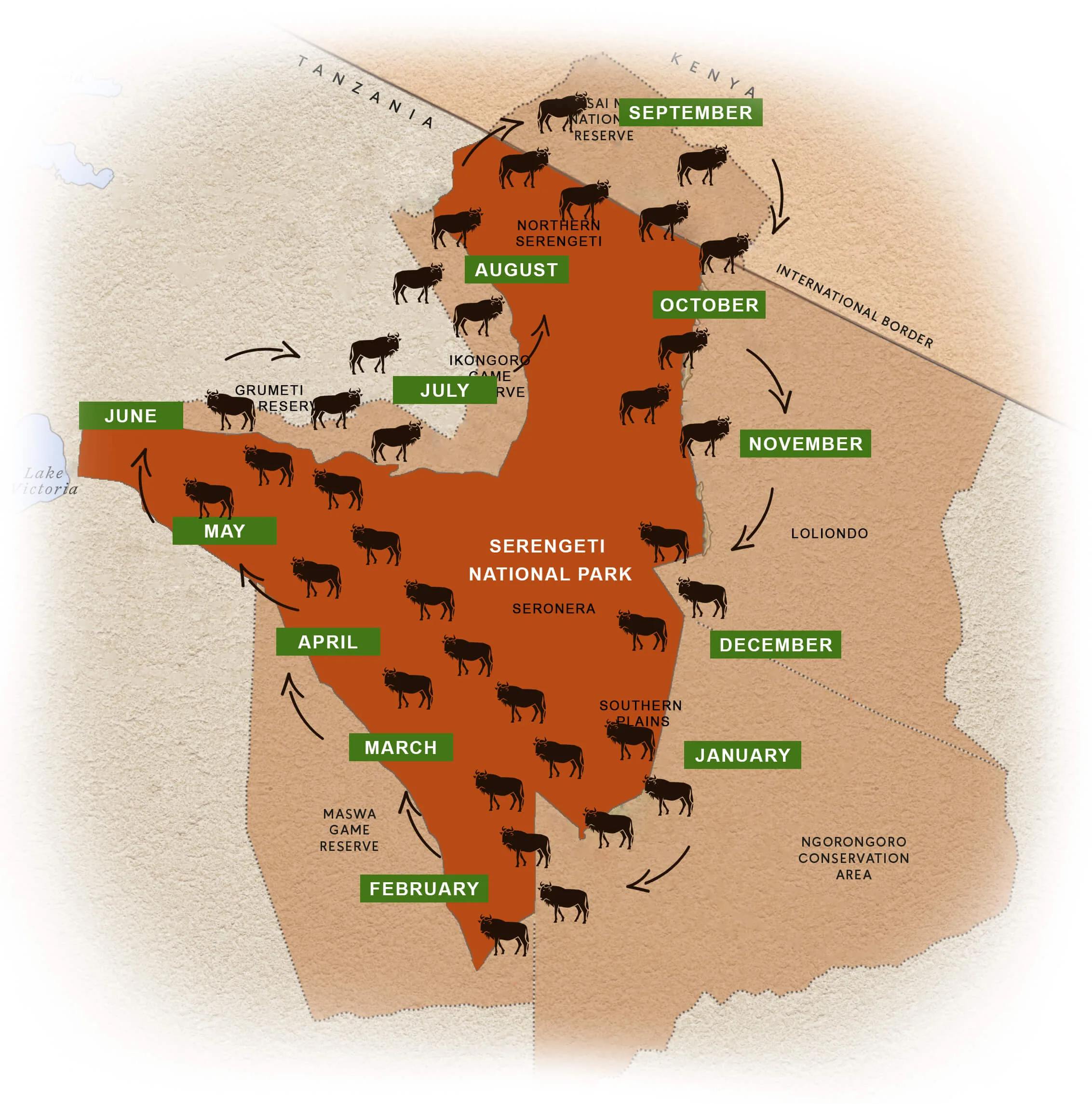
A Great Wildebeest Migration map is one of the most valuable tools for planning a successful safari. It shows the exact movement cycle of the herds—from the lush calving plains of Ndutu to the dramatic Mara River crossing points in the north. These maps highlight key grazing zones, water sources, predator hotspots, and the traditional pathways the animals follow each season.
Understanding the map helps you choose the right location at the right time, whether you want to witness the birthing season, the river crossings, or the vast herds spread across the Serengeti. It also guides your decisions on where to stay, how long to visit, and the best routes for game drives. With a reliable migration map, you can position yourself perfectly for the most unforgettable sightings and gain a deeper appreciation of how massive and dynamic this natural phenomenon truly is.
Why the Migration Is Considered a Natural Wonder
The Great Migration is often described as the eighth wonder of the natural world. The scale alone is staggering—millions of animals moving together in an ancient rhythm. But it is not only the size that makes it special. It is the emotion, the struggle, and the rawness of nature on full display. From tiny calves learning to walk to massive river crossings filled with danger, every moment of the migration is charged with energy and purpose.
Predators follow the herds, crocodiles lie in wait, and storms paint the sky with dramatic light. This combination of beauty and survival makes the migration one of the most striking wildlife events on Earth.
Popular Safari Styles for Witnessing the Migration
Travelers approach the migration in several different ways. Some prefer a calving-season safari that focuses on the earliest stages of life in the southern Serengeti. Others want to be right beside the Mara River for the iconic crossings. Many choose combined safaris that follow the herds across both Kenya and Tanzania. There are also fly-in safaris for travelers who want maximum comfort and minimal travel time.
Each style offers something unique, and all can be customized to match a traveler’s preferences.
7 Days Kenya Family Safari
- Family Safari Holiday in Kenya
Starting From
On Request
Per Person On Twin Sharing
8 Days Best of Kenya Safari
- Kenya Big Five Special Safari
Starting From
On Request
Per Person On Twin Sharing
3 Days Masai Mara Safari from Nairobi
- The Great Wildebeest Migration Safaris
Starting From
On Request
Per Person On Twin Sharing
6 Days Kenyan Bush Adventure
- Best of Kenya Bush Safari
Starting From
On Request
Per Person On Twin Sharing
2 Days Masai Mara - Fly In Safari
- Fly In Safari From Nairobi to Masai Mara
Starting From
On Request
Per Person On Twin Sharing
6 Days Masai Mara Wildebeest Safari
- Masai Mara Wildebeest Safari
Starting From
On Request
Per Person On Twin Sharing
Best Locations to Experience the Migration
In Kenya’s Masai Mara, the river crossing areas such as the Mara River and Talek region are famous for breathtaking encounters. Meanwhile, Tanzania’s Serengeti offers diverse experiences ranging from calving in Ndutu to river crossings in the northern Serengeti and wide-open plains in Seronera.
These areas complement each other beautifully, offering travelers the chance to witness every stage of the migration if they choose.
Interesting Facts About the Migration
The migration is filled with surprising details. The combined herds can move at shocking speeds, sometimes reaching up to 80 km/h. Over a million animals participate, making the migration the largest of its kind on the planet. More than 250,000 animals die each year due to predators, exhaustion, and river crossings, yet the population remains strong because of the enormous number of births during calving season.
These facts illustrate just how extraordinary and resilient the migration truly is.
Tips for Making the Most of Your Migration Safari
Travelers who plan to witness the migration should consider staying near key migration routes, especially during high-action seasons. A reliable vehicle, preferably a 4×4 with pop-up roofs, makes a significant difference in viewing comfort. Booking early ensures better lodge choices, especially around the Mara River during peak months. And most importantly, taking time to enjoy the experience instead of rushing from place to place helps you absorb the beauty of this natural phenomenon.
Looking for The Great Wildebeest Migration Safaris for your dates ?
Receive a free Kenya safari quote straight to your email within 6 hours! Customize your preferences, and we’ll craft a unique experience just for you. Prices vary based on group size and accommodation choice.
We've got you covered
Our tours are top-notch but still give you great value. The price we share upfront covers most of the essential costs for one person, including domestic flights, all transfers, and the key services you’ll need along the way.
Excludes
- International flights (from/to home)
- Additional accommodation before and at the end of the tour
- Tips to your safari guide ($30-50 per day per car).
- Personal items (souvenirs, travel insurance, visa fees, etc.)
- Government imposed increase of taxes and/or park fees
- Alcohol drinks
- Visas and visa fees where relevant
- Additional activities not offered as scheduled by the accommodation
- Lunch and dinner in hotel (only before and after safari);
Includes
- Park fees
- All activities (unless labeled as optional)
- All accommodation as stated in the itinerary
- A professional driver/guide
- All transportation (unless labeled as optional)
- All Taxes/VAT
- Roundtrip airport transfer
- All Meals (as specified in the day-by-day section)
- Air Ambulance Service by AMREF Flying Doctors;
Connect with our local experts for personalized travel planning
Plan your The Great Wildebeest Migration Safaris today
Everything You Need to Know About Your Safari
Every safari adventure begins with a question. Whether it’s your first or second time, it’s natural to wonder about the best time to visit, what to pack, or how the journey works. Here, we’ve answered the most common questions travelers ask before booking their Kenya safari, so you can plan with confidence and look forward to unforgettable memories.
The migration includes more than 1.5 million wildebeests, along with hundreds of thousands of zebras and gazelles. Together, they form one of the largest and most impressive gatherings of animals in the world. Seeing this massive movement across the savannah is something that overwhelms the senses and leaves travelers speechless.
Their movement is guided by the search for fresh grass and reliable water sources. As rain patterns change throughout the year, the herds instinctively follow the areas where new grass grows. This cycle ensures that the animals stay nourished and healthy, even though the journey exposes them to many dangers.
The ideal time depends on what part of the migration you want to experience. Travelers hoping to see the dramatic Mara River crossings should visit between July and October. Those who want to witness the beginning of life during calving season should plan for January to March in the southern Serengeti. Every stage has its own magic, making the migration a rewarding experience year-round.
Despite the dangers posed by crocodiles, strong currents, and steep riverbanks, the herds must cross to reach fresh feeding grounds. Their survival depends on these crossings, and instinct drives them forward. Watching this unfold reminds travelers of nature’s raw power and the determination of these animals to survive.
The migration takes place every year, but specific dates can shift slightly depending on rainfall. Even with these variations, the general pattern remains consistent, and experienced guides can predict with great accuracy where the herds will be at any given time. Choosing a knowledgeable safari team ensures you are positioned in the right place to witness the most exciting moments.
If your question is not listed, please contact us from here.